


The Delaware Supreme Court recently issued a significant decision in Thompson Street Capital Partners IV, L.P. v. Sonova United States Hearing Instruments, LLC, clarifying the importance of strict compliance with indemnification notice requirements in mergers and acquisitions (M&A) agreements. As a result of the decision, practitioners should consider stipulating in the relevant M&A agreement that the notice requirements are material to the parties’ bargain.
Background
In 2022, Sonova United States Hearing Instruments, LLC (Sonova) acquired audiology practices from Alpaca Group Holdings, LLC, with Thompson Street Capital Partners (Thompson) acting as the members’ representative for Alpaca’s former members. The transaction was governed by a merger agreement and an escrow agreement. The merger agreement required Sonova to provide a written claim notice with specific details and supporting evidence by a certain deadline (survival date) to recover from the indemnity escrow fund. On August 25, 2023, Sonova submitted a claim notice one day before the escrow expiration, alleging improper billing practices but did not include supporting written evidence or a quantified damages amount. Thompson sued, arguing Sonova’s notice was deficient and the escrow funds should be released. The Delaware Court of Chancery subsequently dismissed the complaint, focusing on the escrow agreement and finding Sonova’s notice sufficient to prevent release of the escrow funds. Thompson appealed to the Delaware Supreme Court.
Analysis
On appeal, the Delaware Supreme Court found the merger agreement’s notice requirements were controlling (rather than those in the escrow agreement) and that the merger agreement created a condition precedent, potentially triggering forfeiture of Sonova’s indemnification rights if not met. However, according to the court, Delaware law may excuse noncompliance if the notice requirements were not material to the underlying agreement and enforcing them would cause a disproportionate forfeiture. The case was remanded to the Delaware Court of Chancery for further factual development on these points.
Takeaways
This court’s decision highlights the critical need for precision in contract compliance and the potential consequences of overlooking detailed notice provisions in M&A transactions governed by Delaware law. Specifically:
- Parties to M&A agreements should strictly comply with notice requirements for indemnification claims, as failure may result in loss of recovery rights.
- Courts may excuse technical noncompliance if enforcing the condition would be disproportionate and the requirement was not material to the deal.
- When drafting or responding to indemnification claims, parties should document compliance with all contractual notice provisions and be prepared to show materiality and prejudice if a dispute arises.
- Alternatively, parties should consider stipulating to the materiality of all notice provisions in the underlying M&A agreement.
Companies of all sizes, and especially e-commerce companies, have been hit by waves of demand letters and lawsuits over the past decade alleging that websites and (increasingly) mobile applications are inaccessible to individuals with disabilities. Most of these cases tend to result in early settlements and few go to trial because businesses tend to have limited affirmative defenses and the cost of litigating typically far outweighs the cost of settlement.
While digital accessibility litigation continues to proliferate, the U.S. Department of Justice (DOJ) has not yet promulgated a clear technical accessibility standard through regulations or regulatory guidance under Title III of the Americans with Disabilities Act (ADA), which applies to public accommodations (i.e., businesses that offer goods and services to the public). As a result, many businesses seek to comply with the Web Content Accessibility Guidelines (WCAG), which are an international standard that has been referenced in some of the DOJ’s consent decrees, as well as court orders. While companies could apply any technical accessibility standard that meets the “effective communication” requirement of Title III of the ADA, they have expressed a desire for certainty in knowing that the standard they use will meet the DOJ’s expectations, should they need to defend it in litigation. Certainty concerning a technical accessibility standard can only be achieved through the DOJ amending its Title III regulations or issuing regulatory guidance.
This article explains the current regulatory environment, the state of digital accessibility litigation, and potential legislative solutions to the challenges they pose, as well as steps that businesses can take to mitigate the risk of lawsuits.
Read the full article on ABA Business Law Today.
Gene Fishel and Kyara Rivera Rivera, a counsel and an associate in Troutman Pepper Locke’s Regulatory Investigations, Strategy, and Enforcement Practice Group, were published in the July 2025 Data Protection Leader article, “Virginia Enacts Restrictions for Children and Social Media.”
On August 7, President Donald Trump issued an executive order directing federal agencies, particularly the Department of Labor, to work on expanding access to alternative investments for participants in 401(k) and other defined-contribution retirement plans. These alternative investments include private equity, private credit, real estate, and digital assets such as cryptocurrency.
The order instructs the Department of Labor to review and clarify its guidance on fiduciary responsibilities under the Employee Retirement Income Security Act of 1974 (ERISA), with the goal of reducing regulatory and litigation barriers that have previously limited the inclusion of these types of assets in retirement plans. The order aims to help retirement savers diversify their portfolios and potentially improve their returns by making it easier for plans to offer a broader range of investment options.
Key Provisions
- Alternative Assets Definition: The executive order covers a broad range of private market investments, such as equity, debt, and other financial instruments that are not publicly traded, with a special focus on private credit. Private credit typically involves lending to businesses that are not publicly traded, which can provide higher yields compared to more traditional fixed-income investments. By expanding access to these types of investments, the order aims to give retirement savers access to investment opportunities previously available only to institutional investors.
- Department of Labor Review: The Department of Labor has been directed to issue proposed regulations or guidance, which may include safe harbors, to clarify the fiduciary duties for those offering asset allocation funds that invest in alternative assets, such as private credit. The Department of Labor is also expected to identify specific criteria that fiduciaries can use to weigh the potential costs and benefits of alternative investments. These steps are intended to help fiduciaries make informed decisions and ensure that retirement plans are managed responsibly as new investment options become available.
- Mitigating Litigation Risks: The executive order is designed to address and reduce litigation concerns that have historically discouraged plan sponsors and fiduciaries from including alternative assets such as private credit in retirement plans. By providing clearer guidance, the administration hopes to reduce the risk of ERISA-related lawsuits, making it easier and less risky for plans to offer these types of investments to participants.
Implications for the Private Credit Sector
- Potential Benefits: The inclusion of private credit in 401(k) plans could significantly increase fundraising opportunities for private credit managers by opening access to a large pool of retirement savings that has not previously been available to them. Traditionally, private credit investments — such as loans to private companies or non-publicly traded debt instruments — have been the domain of institutional investors like pension funds, endowments, and insurance companies. By opening 401(k) plans to these types of investments, private credit managers could tap into the trillions of dollars held in defined-contribution retirement accounts, representing a substantial new source of capital.
- This expansion could lead to greater capital inflows for private credit funds, enabling them to finance more projects and diversify their portfolios. For the private credit sector, this means not only increased fundraising but also the potential for broader market participation and innovation in investment products tailored to retirement savers. For individuals participating in 401(k) plans, private credit can offer greater diversification and the possibility of competitive returns, which may help improve the overall performance of their retirement portfolios. Expanding access to private credit means that retirement savers could benefit from investment opportunities that were traditionally reserved for institutional investors, such as pension funds and endowments.
- Associated Risks: Private credit investments come with unique risks, such as illiquidity (meaning they can be harder to sell quickly), challenges in accurately valuing the assets, and potential conflicts of interest. Because of these complexities, plan fiduciaries must conduct thorough due diligence and implement risk management practices to ensure that private credit investments are suitable for retirement plan participants.
Implementation Timeline
The executive order begins a regulatory review process, meaning that any substantive changes to retirement plan investment options will take time to implement. As a result, new investment options such as private credit may not be available until 2026 or later, depending on how quickly regulators act. Stakeholders should expect a gradual rollout of new guidelines and investment opportunities as federal agencies, including the Department of Labor, the Treasury Department, and the Securities and Exchange Commission, work through the necessary rulemaking and guidance.
During this period, plan sponsors and fiduciaries should begin preparing for upcoming regulatory changes by carefully reviewing their fund structures, compliance processes, and fiduciary documentation. As regulations evolve, institutions should expect increased requirements for diligence and documentation, meaning fiduciaries will need to clearly demonstrate that they are following prudent processes when selecting and monitoring alternative investments. This proactive approach will help ensure that plans remain compliant and that participants are well-informed as new investment options become available.
Conclusion
Trump’s executive order represents a significant shift in federal policy, aiming to broaden access to alternative assets within 401(k) plans. The executive order could reshape the private credit landscape by unlocking a large, previously untapped source of capital. The ultimate success of this initiative will rely on strong collaboration among federal agencies and the ability of fiduciaries to effectively manage the complexities of alternative asset investments, safeguarding the interests of retirement plan participants as the regulatory landscape evolves.
References
On August 7, President Donald Trump issued an executive order directing federal agencies, particularly the Department of Labor, to work on expanding access to alternative investments for participants in 401(k) and other defined-contribution retirement plans. These alternative investments include private equity, private credit, real estate, and digital assets such as cryptocurrency.
The order instructs the Department of Labor to review and clarify its guidance on fiduciary responsibilities under the Employee Retirement Income Security Act of 1974 (ERISA), with the goal of reducing regulatory and litigation barriers that have previously limited the inclusion of these types of assets in retirement plans. The order aims to help retirement savers diversify their portfolios and potentially improve their returns by making it easier for plans to offer a broader range of investment options.
Key Provisions
- Alternative Assets Definition: The executive order covers a broad range of private market investments, such as equity, debt, and other financial instruments that are not publicly traded, with a special focus on private credit. Private credit typically involves lending to businesses that are not publicly traded, which can provide higher yields compared to more traditional fixed-income investments. By expanding access to these types of investments, the order aims to give retirement savers access to investment opportunities previously available only to institutional investors.
- Department of Labor Review: The Department of Labor has been directed to issue proposed regulations or guidance, which may include safe harbors, to clarify the fiduciary duties for those offering asset allocation funds that invest in alternative assets, such as private credit. The Department of Labor is also expected to identify specific criteria that fiduciaries can use to weigh the potential costs and benefits of alternative investments. These steps are intended to help fiduciaries make informed decisions and ensure that retirement plans are managed responsibly as new investment options become available.
- Mitigating Litigation Risks: The executive order is designed to address and reduce litigation concerns that have historically discouraged plan sponsors and fiduciaries from including alternative assets such as private credit in retirement plans. By providing clearer guidance, the administration hopes to reduce the risk of ERISA-related lawsuits, making it easier and less risky for plans to offer these types of investments to participants.
Implications for the Private Credit Sector
- Potential Benefits: The inclusion of private credit in 401(k) plans could significantly increase fundraising opportunities for private credit managers by opening access to a large pool of retirement savings that has not previously been available to them. Traditionally, private credit investments — such as loans to private companies or non-publicly traded debt instruments — have been the domain of institutional investors like pension funds, endowments, and insurance companies. By opening 401(k) plans to these types of investments, private credit managers could tap into the trillions of dollars held in defined-contribution retirement accounts, representing a substantial new source of capital.
This expansion could lead to greater capital inflows for private credit funds, enabling them to finance more projects and diversify their portfolios. For the private credit sector, this means not only increased fundraising but also the potential for broader market participation and innovation in investment products tailored to retirement savers. For individuals participating in 401(k) plans, private credit can offer greater diversification and the possibility of competitive returns, which may help improve the overall performance of their retirement portfolios. Expanding access to private credit means that retirement savers could benefit from investment opportunities that were traditionally reserved for institutional investors, such as pension funds and endowments.
- Associated Risks: Private credit investments come with unique risks, such as illiquidity (meaning they can be harder to sell quickly), challenges in accurately valuing the assets, and potential conflicts of interest. Because of these complexities, plan fiduciaries must conduct thorough due diligence and implement risk management practices to ensure that private credit investments are suitable for retirement plan participants.
Implementation Timeline
The executive order begins a regulatory review process, meaning that any substantive changes to retirement plan investment options will take time to implement. As a result, new investment options such as private credit may not be available until 2026 or later, depending on how quickly regulators act. Stakeholders should expect a gradual rollout of new guidelines and investment opportunities as federal agencies, including the Department of Labor, the Treasury Department, and the Securities and Exchange Commission, work through the necessary rulemaking and guidance.
During this period, plan sponsors and fiduciaries should begin preparing for upcoming regulatory changes by carefully reviewing their fund structures, compliance processes, and fiduciary documentation. As regulations evolve, institutions should expect increased requirements for diligence and documentation, meaning fiduciaries will need to clearly demonstrate that they are following prudent processes when selecting and monitoring alternative investments. This proactive approach will help ensure that plans remain compliant and that participants are well-informed as new investment options become available.
Conclusion
Trump’s executive order represents a significant shift in federal policy, aiming to broaden access to alternative assets within 401(k) plans. The executive order could reshape the private credit landscape by unlocking a large, previously untapped source of capital. The ultimate success of this initiative will rely on strong collaboration among federal agencies and the ability of fiduciaries to effectively manage the complexities of alternative asset investments, safeguarding the interests of retirement plan participants as the regulatory landscape evolves.
References
- Democratizing Access to Alternative Assets for 401(K) Investors – The White House
- Fact Sheet: President Donald J. Trump Democratizes Access to Alternative Assets for 401(k) Investors – The White House
The Trump administration’s implementation of tariffs on August 7, 2025, will have profound implications for companies engaged in international supply chains. These tariffs are poised to increase business costs, affecting a wide range of industries reliant on global trade. However, the financial impact is not the only concern for businesses. With the Department of Justice (DOJ) intensifying its focus on enforcement actions related to international trade compliance, companies that attempt to evade these tariffs or fail to establish robust compliance policies and procedures may find themselves among the DOJ’s targets.
The DOJ’s heightened scrutiny is underscored by two recent settlements, which may offer insights into future enforcement trends. These settlements highlight the critical importance of compliance and transparency in navigating international trade under the current administration’s policies. As businesses adapt to these changes, the need for effective compliance programs becomes increasingly imperative to mitigate risks and avoid potential legal repercussions.
On July 23, 2025, the DOJ announced a $6.8 million settlement with Global Plastics LLC, based in Manchester, NH, and Marco Polo International LLC, based in Melville, NY. Both companies are subsidiaries of MGI International LLC. The settlement resolves civil liability under the False Claims Act for knowingly failing to pay customs duties on plastic resin imported from the People’s Republic of China (PRC).
The allegations against Global Plastics and Marco Polo centered on their failure to declare the correct country of origin and value for certain plastic resin entries, resulting in unpaid duties. Beginning in May 2019, these companies did not accurately report the origin and value of the imported goods, leading to a significant shortfall in customs duties owed to U.S. Customs and Border Protection (CBP). In 2024, MGI and its subsidiaries voluntarily disclosed these discrepancies to CBP and the U.S. Attorney’s Office for the District of New Hampshire.
The DOJ acknowledged MGI’s cooperation, which included making a timely voluntary self-disclosure, conducting a thorough internal investigation, and implementing remedial actions such as disciplining personnel and enhancing compliance procedures. As a result, MGI received credit for its proactive measures, leading to a lower monetary settlement under the department’s guidelines.
On July 24, 2025, the DOJ announced a $4.9 million settlement with Grosfillex Inc., a patio furniture company located in Pennsylvania. This settlement addresses allegations of evading antidumping and countervailing duties (AD/CVD) on extruded aluminum items from the PRC.
The DOJ alleged that Grosfillex submitted false customs forms to CBP, claiming that certain aluminum furniture parts were not subject to AD/CVD. The Department of Commerce assesses, and CBP collects, these duties to protect domestic producers from unfair trade practices. Grosfillex allegedly attempted to camouflage aluminum extrusions by packaging them as sham furniture “kits” and knowingly failed to correct customs forms that falsely stated certain parts were not subject to AD/CVD, even after learning of the inaccuracies.
This settlement arose from a whistleblower lawsuit filed under the False Claims Act by a former employee of Grosfillex. The DOJ reiterated its commitment to enforcing trade laws and protecting domestic industries from unfair practices, emphasizing that it will actively pursue those who knowingly fail to pay customs duties.
Key Takeaways
With the Trump administration’s implementation of new tariffs and the DOJ’s focus on pursuing customs enforcement, it is imperative that companies that import goods, particularly from China and other countries facing increased tariffs, implement effective compliance programs.
An effective compliance program that addresses risks associated with customs duties should ensure not only that written policies are in place but that companies implement them. Companies generally should train their employees on import compliance, monitor their supply chains, closely examine key contracts with suppliers, implement detailed recordkeeping, and test and audit their trade compliance processes and documentation.
Companies must also recognize the benefits of early detection and potential self-disclosures of violations. For MGI, the DOJ emphasized that the company’s timely and voluntary self-disclosure of the violations, combined with a thorough internal investigation and the implementation of remedial measures, constituted important mitigating action that provided MGI with relief from a more serious penalty. While businesses must make self-disclosure decisions on a case-by-case basis, any company that discovers customs violations in its business should conduct a thorough internal investigation to determine the extent of the violations and implement appropriate remedial measures.
The U.S. Federal Trade Commission’s Section 6(b) Report investigated three partnerships between major cloud service providers (Alphabet/Google, Amazon, and Microsoft) and leading AI developers (Anthropic and OpenAI). Conducted under the Biden administration, the report highlights previously non-public details on the structure and outcomes of these CSP-AI partnerships. It also identifies competitive dynamics, such as access to resources and information sharing, that could raise future competition concerns in the AI ecosystem. The significance of the report remains uncertain, as the Trump 2.0 administration’s emphasis on AI innovation and global AI dominance appears to be shifting the course of FTC enforcement priorities.
Click here to read the full article in Concurrences.
In Weil Holdings II, LLC, v. Jeffrey Alexander, DPM, the Delaware Court of Chancery struck down a noncompete provision contained in the LLC agreement of a sponsor-backed portfolio company, finding the provision unreasonable in both duration and geographic scope. The decision is notable because the term of the provision (i.e., for the ownership period plus a two-year tail period) is common in the private equity space, suggesting that, pending the outcome of an appeal to the Delaware Supreme Court, a reformulation may be advisable.
Background
In 2023, as part of a broader transaction, Dr. Jeffrey Alexander (defendant) purchased an ownership interest in Weil Holdings II, LLC (plaintiff), a holding company that owns multiple companies that operate in the podiatry industry, including Weil Foot and Ankle Institute (WFAI) and executed the plaintiff’s LLC agreement, which contained a noncompete provision that prohibited him from competing against the plaintiff or an “affiliate practice” within the “restricted territory” for so long as the defendant held an ownership interest in the company and for two years afterwards. The restricted territory covered WFAI’s 16 locations and additional locations of WFAI’s affiliates, including two states where the defendant had never worked. The language of the LLC agreement also allowed for the restricted territory to expand as the plaintiff opened new locations. Later in 2023, WFAI terminated the defendant’s employment and the defendant subsequently began practicing podiatry at an alleged competing practice. The plaintiff brought suit, seeking, among other things, to enforce the noncompete.
Analysis
Delaware courts will not mechanically enforce noncompetes, as they are restrictive of trade. Under Delaware law, a noncompete must (i) be reasonable in geographic scope and temporal duration, (ii) advance a legitimate economic purpose of the enforcing party, and (iii) survive a balance of the equities. As part of its analysis, the court distinguished between noncompetes within the employment context, where the court must balance the enforcement of contractual promises against the need to avoid oppressive restrictions that may arise from unequal bargaining power, and noncompetes within the sale of business context, where there is generally less disparity in bargaining power amongst the parties.
The plaintiff argued that the provisions within an LLC agreement should not receive the same level of scrutiny that noncompetes receive in employment agreements. The plaintiff also highlighted that the defendant willingly entered into the LLC agreement as an investor and made standard representations that he was a sophisticated investor capable of evaluating the merits and risks of the investment. Despite the level of scrutiny applied, the court nevertheless held that the scope of the noncompete was unreasonable and that it was “not a close call.”
According to the court, the duration of the noncompete was potentially indefinite, rendering it invalid, because the LLC agreement did not afford members a mandatory redemption right. While the LLC agreement gave the plaintiff the option to repurchase the defendant’s ownership interest, this did not matter for purposes of the court’s analysis because the defendant did not have the power to divest himself of his ownership interests and therefore start the clock on the two-year tail period. With respect to the geographic scope of the noncompete, the court stated that preventing the defendant from practicing podiatric medicine in four states, including two where the defendant had never practiced, is not appropriately tailored to protecting the plaintiff’s legitimate business interests. The court was also concerned that the restricted territory could change because it was tied to affiliate practices as the defendant expanded the location of its practices or opened entirely new practices. Under this arrangement, the defendant could be working in an area that is not within the restricted territory but nonetheless find himself in breach of the noncompete if the defendant decided to open a new practice in that location. Consistent with recent cases from the Delaware Court of Chancery, the court declined to blue-pencil the noncompete provision.
Takeaways
This decision serves as a cautionary tale for sponsor-backed companies to potentially re-evaluate the scope of their restrictive covenants outside the sale of business context, both with respect to duration and geography. While it is standard practice to require members, including employees, to sign onto LLC agreements with noncompetes, these restrictions must still be reasonable in both duration and geographic scope, otherwise the restrictions are likely to be invalidated completely if challenged. If the durational scope of the provision is tied to the member’s ownership of interests in the company, the member must be able to divest their interest to start the clock on the noncompete tail. This could be accomplished with a put right that requires the company to repurchase the ownership interest upon termination of the employment relationship at a stated price depending upon the circumstances. If the noncompete is tied to a geographical area, those areas should ideally not be subject to change and should only prohibit competition in areas necessary to protect the company’s legitimate business interests. We note that the decision is on appeal to the Delaware Supreme Court and, as such, any final practical takeaways and drafting considerations may change.
State attorneys general increasingly impact businesses in all industries. Our nationally recognized state AG team has been trusted by clients for more than 20 years to navigate their most complicated state AG investigations and enforcement actions.
State Attorneys General Monitor analyzes regulatory actions by state AGs and other state administrative agencies throughout the nation. Contributors to this newsletter and related blog include attorneys experienced in regulatory enforcement, litigation, and compliance. Also visit our State Attorneys General Monitor microsite.
Contact our State AG Team at StateAG@troutman.com.
Troutman Pepper Locke Spotlight
Navigating Multistate AG Investigations: Tools and Tactics
By Troutman Pepper Locke State Attorneys General Team
Register Here
Wednesday, August 20 • 1:00 – 3:10 p.m. ET
Members of Troutman Pepper Locke’s State Attorneys General (AG) team, Ashley Taylor, Clayton Friedman, and Namrata Kang, will participate in an upcoming CLE with myLawCLE for an in-depth exploration of AG investigations. This presentation will focus on multistate actions, recent trends, and emerging regulatory challenges. With decades of experience in both single and multistate AG investigations, the panelists will provide essential tools to help you effectively manage these complex processes.
State Attorneys General Step Up Enforcement With Regulatory Shift of Trump Administration
By Ashley L. Taylor, Jr., Clayton Friedman, Michael Yaghi, Natalia Jacobo, and Warren F. “Jay” Myers
Ashley Taylor, Clayton Friedman, Michael Yaghi, Natalia Jacobo, and Jay Myers of Troutman Pepper Locke LLP discuss stepped up enforcement efforts among state attorneys general in the face of the Trump administration’s broad deregulatory agenda and as federal agencies appear to shift litigation priorities.
Justices’ Age Verification Ruling May Lead To More State Laws
By Laura Hamady, Jeff Johnson, Jessica Birdsong, and Chris Carlson
This article was originally published on August 4, 2025 on Law360 and is republished here with permission.
The digital age presents a complex challenge: protecting children online while also allowing free speech to continue to be a thriving marketplace of ideas.
Multistate State AG News
Bipartisan State AGs Urge Congress to Grant Access to Federally Regulated Banking and Financial Services to State-Regulated Cannabis Businesses
By Troutman Pepper Locke State Attorneys General Team, Jean Smith-Gonnell, and Cole White
In July 2025, a bipartisan coalition of 32 state and territorial attorneys general (AG) sent a letter to congressional leaders urging the passage of the Secure and Fair Enforcement Regulation (SAFER) Banking Act. Their letter emphasizes that the legislation — a long-stalled federal reform — would provide legal clarity and a safe harbor for banks and financial institutions to serve state-licensed cannabis businesses. Such clarity, they argue, is urgently needed to address public safety risks and to improve the states’ ability to regulate and tax the booming cannabis industry.
State AGs Join $202M Settlement Over HIV Drug Kickback
By Troutman Pepper Locke State Attorneys General Team and Timothy Shyu
What Happened
On July 16, 49 attorneys general (AGs) announced that they joined a $202 million settlement with Gilead Sciences, Inc. (Gilead). Previously announced by the Department of Justice in April, the settlement resolved allegations that the company incentivized doctors to prescribe its medication through HIV speaker programs.
Data Privacy State AG News
New Jersey’s Data Deletion Law: Implications for Resold or Re-leased Vehicles
By Troutman Pepper Locke State Attorneys General Team, Matthew Cali, and Daniel Waltz
On July 28, the New Jersey Division of Consumer Affairs issued a reminder to more than 3,000 auto dealerships regarding their obligations under the New Jersey data deletion law, N.J.S.A. § 56:12-18.1. This law, enacted and effective in January 2024, requires dealerships to offer data deletion services for consumer information stored in vehicles accepted for resale or lease. Dealerships are now on notice of their compliance obligations under the law.
Streaming Under Scrutiny: Roku’s Response to Michigan AG’s Allegations of COPPA and Other Privacy Law Violations
By Troutman Pepper Locke State Attorneys General Team, Angelo A. Stio III, Laura Hamady, Esther Kye, and Kyara Rivera Rivera
On April 29, Michigan Attorney General (AG) Dana Nessel filed a lawsuit against Roku, Inc. (Roku), the smart TV and device provider and streaming service, alleging Roku violated the Children’s Online Privacy Protection Act (COPPA), federal and state privacy laws, the Michigan Consumer Protection Act, and other laws by collecting children’s personal data and selling it without proper parental consent. The lawsuit sought damages and equitable relief on behalf of Michigan consumers who subscribed to Roku’s streaming service. More information regarding this lawsuit can be found here.
Federal News
White House Seeks AI Progress Through De Minimis Regulation and Allocation of Federal Resources
By Troutman Pepper Locke State Attorneys General Team, Gene Fishel, and Nick Gouverneur
On July 23, President Trump announced efforts to position the U.S. at the forefront of the global artificial intelligence (AI) race. “Winning the AI Race: America’s AI Action Plan” details how the federal government will advance the AI industry and was issued pursuant to the president’s January 23 Executive Order (EO) 14179, “Removing Barriers to American Leadership in Artificial Intelligence.”
Other Single State AG News
Colorado AG Sues PetSmart Over TRAP Contracts
By Troutman Pepper Locke State Attorneys General Team and Blake Christopher
Colorado Attorney General (AG) Phil Weiser has sued PetSmart LLC, alleging that its use of Training Repayment Agreement Provisions (TRAPs) violates state consumer protection and labor laws. The lawsuit reflects a broader effort by Weiser and other state AGs to combat purportedly exploitive employment agreements.
Florida AG Announces Investigations Into Climate Scoring Organizations
By Troutman Pepper Locke State Attorneys General Team and Timothy Shyu
What Happened
On July 28, Florida Attorney General (AG) James Uthmeier announced investigations into two environmental, social, and governance (ESG) scoring organizations for potential violations of state consumer protection and antitrust laws. This investigation is consistent with a continuing trend among Republican AGs to scrutinize entities directly and indirectly involved in encouraging ESG-based initiatives. For example, in the last three years, Republican AGs have targeted the Net-Zero Banking Alliance and the Net-Zero Asset Managers over antitrust and fiduciary duty concerns related to ESG. Membership in both organizations dwindled as a result.
AG of the Week
John Formella, New Hampshire
John Formella was sworn in as New Hampshire’s AG on April 22, 2021, following his nomination by Governor Chris Sununu and confirmation by the Executive Council. As AG, Formella serves as the state’s chief law enforcement officer, chief prosecutor, and chief legal officer.
Before this role, Formella was Sununu’s legal counsel, advising on significant legal issues and litigation affecting New Hampshire, including health care settlements, the opioid crisis response, criminal justice reform, and the COVID-19 pandemic. He began his legal career in private practice at Pierce Atwood LLP, focusing on business and environmental law.
Formella is active in the community, having served on the Zoning Board of Adjustment for Portsmouth and as a board member of McGregor Memorial EMS in Durham. In 2019, he was recognized as one of New Hampshire’s “40 Under Forty” and one of the “10 to Watch” young professionals in the Seacoast region.
He is a Phi Beta Kappa and magna cum laude graduate of Florida State University and graduated with honors from George Washington University Law School, where he contributed to the International Law Review.
New Hampshire AG in the News:
- As part of a coalition of 51 AGs, Formella announced the launch of Operation Robocall Roundup, a multistate effort to crack down on robocalls across the U.S.
- Alongside Governor Kelly Ayotte, Formella announced an expansion of the New Hampshire Cold Case Unit, increasing the number of New Hampshire Department of Justice investigators assigned to the unit from one part-time position to two full-time roles.
- Formella issued a consumer alert warning retirees and beneficiaries of the New Hampshire Retirement System (NHRS) about a series of alleged fraudulent attempts to redirect pension payments through falsified direct deposit change requests.
Upcoming AG Events
- August: AGA | Chair’s Initiative | Alaska
- September: RAGA | Fall National Meeting | Miami, FL
- September: DAGA | Denver Policy Conference | Denver, CO
For more on upcoming AG Events, click here.
Troutman Pepper Locke’s State Attorneys General team combines legal acumen and government experience to develop comprehensive, thoughtful strategies for clients. Our attorneys handle individual and multistate AG investigations, proactive counseling and litigation, and manage ancillary regulatory issues. Our successful approach has been recognized by Chambers USA, which ranked our practice as a leader in the industry.
Our Cannabis Practice provides advice on issues related to applicable federal and state law. Marijuana remains an illegal controlled substance under federal law.
On August 11, President Trump issued an executive order, “Further Modifying Reciprocal Tariff Rates to Reflect Ongoing Discussions With the People’s Republic of China” (Order), extending the suspension of heightened tariffs on Chinese imports for another 90 days. The Order preserves the temporary reduced reciprocal tariff rate established on May 12 under Executive Order 14298, rather than reverting to the higher 125% reciprocal tariff rate originally imposed under Executive Order 14257, as amended (Reciprocal Tariff) that would have taken effect without the extension.
The suspension — originally set to expire at 12:01 a.m. EDT on August 12 — will now run until 12:01 a.m. EST on November 10, as the U.S. and China continue negotiations aimed at addressing longstanding concerns over non-reciprocal trade arrangements and national security risks.
Background of the Tariff Actions
The Order builds on a series of escalating trade actions between the U.S. and China in 2025. It began with Executive Order 14257, issued on April 2, in which President Trump declared a national emergency under the International Emergency Economic Powers Act to address trade imbalances with China. That order imposed a 34% ad valorem reciprocal tariff on Chinese imports to promote trade reciprocity and protect U.S. national security.
In response to China’s retaliatory 34% tariff on U.S. goods, President Trump issued Executive Order 14259 on April 8, increasing the U.S. tariff on Chinese imports to 84%, including low-value goods. China responded the same day by announcing an 85% tariff on U.S. goods, effective April 10.
Later on April 10, President Trump issued Executive Order 14266, further raising U.S. tariffs on Chinese imports to 125%. Following subsequent U.S.-China trade negotiations, President Trump issued Executive Order 14298 on May 12, temporarily suspending the 125% rate for 90 days to facilitate discussions, replacing it with a reduced 10% reciprocal tariff.
Overview of the Order
- Continuation of Tariff Suspension: The U.S. will continue to maintain the temporary 10% Reciprocal Tariff on Chinese-origin goods (including covered products of Hong Kong and Macau) entered for consumption or withdrawn from a warehouse for consumption before 12:01 a.m. EST on November 10. U.S. Customs and Border Protection has issued guidance regarding the extended temporary Reciprocal Tariff rate for China as outlined in the Order.
- Retention of Existing Tariffs: The 20% universal tariff on all Chinese imports, established under Executive Order 14195 and modified by Executive Order 14228, along with other existing tariffs on Chinese-origin goods, including anti-dumping and countervailing duties, as well as tariffs under Section 301 or Section 201 of the Trade Act of 1974, remain in effect without changes.
Looking Ahead
The 90-day reprieve buys negotiators more time to hammer out a longer-term deal. The ongoing trade talks between the U.S. and China are not limited to tariffs, they also touch on critical technology and raw materials. Particularly, China is pressing the U.S. to ease export restrictions on high-bandwidth memory chips, which are essential for assembling advanced AI processors and account for a significant share of the value in AI systems. These chips are currently subject to U.S. export controls that restrict their sale to China without a specific license from the U.S. government. Negotiations also cover more traditional trade elements. These include increased Chinese purchases of U.S. agricultural goods, such as soybeans, greater U.S. access to rare-earth minerals, and reductions in non-tariff barriers affecting U.S. companies operating in China. A major sticking point, however, remains China’s continued energy purchases from Russia and Iran. China has resisted U.S. pressure to halt these imports — defying calls to stop buying oil from both countries — emphasizing that energy security and national sovereignty will not be compromised, despite U.S. threats of 100% tariffs.
Nevertheless, while the extension signals a willingness to maintain open channels with China, it also underscores that the underlying national emergency declared in April remains in effect. If substantive progress is not achieved by November 2025, the administration could reimpose the original higher tariff rates — potentially with additional modifications based on evolving trade and security considerations.
Please enjoy the summer edition of Troutman Pepper Locke’s alumni newsletter. This issue features interviews with alumni Brian McCann and Marty Walz, dates for upcoming alumni receptions, messages from firm leaders and the alumni relations team, recent alumni moves, free CLE offerings, and more.
A Message From Firm Leaders
We are excited to share several highlights from the past few months as well as spotlight some upcoming events that are taking place across our offices.
Since April, we have welcomed 13 new lateral partners across several of our practices: Michael Barnicle (RISE); Casey Bell (Energy Regulatory); Lawrence Cameron (White Collar Litigation and Investigations); Michael Cecka, Chris Fernandez, David Fialkow, and Melissa Kato (Bankruptcy and Restructuring); Aresh Homayoun (Tax and Benefits); Ben Mittman, Allison Pearce, and Brian Rose (Private Equity and Investment Funds); David Stauss (Privacy and Cyber); and Marisa Young (Insurance Transactional and Regulatory). Throughout the first half of the year, 19 lateral partners have joined the firm, further broadening our client base and enhancing our capabilities.
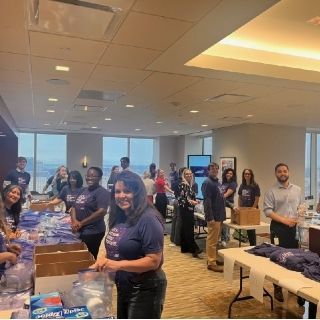
We also recently hosted our inaugural firmwide Week of Service as Troutman Pepper Locke, where more than 1,000 attorneys and business professionals volunteered to participate in 112 service projects across 71 organizations throughout the communities where we work and live.
Serving our communities is a deeply ingrained tradition, rooted in our combined firm’s rich legacy, and we look forward to continuing and growing this tradition of service at Troutman Pepper Locke — not only through initiatives like Week of Service but also through our pro bono work and the Pepper Center for Public Service.
We look forward to seeing many of you at one of our upcoming alumni receptions and at our several Continuing Legal Education (CLE) sessions that will be held over the next few months. You can learn more about these events and other firm-related news and updates throughout this newsletter.
Hope to see you soon.
Tom, Amie, David, and Ashley
 |
Tom Cole Chair |
 |
Amie Colby Managing Partner |
 |
David Taylor Vice Chair |
 |
Ashley Taylor Vice Chair |
Alumni Relations at Troutman Pepper Locke
Amidst your summer vacations, activities, and well-earned R&R, consider taking some time this season to refresh your professional profile and expand your network. Here are a few helpful tips:
Reflect on Your Goals
Summer’s longer days offer a perfect opportunity to reflect on your accomplishments from the first half of the year and reassess priorities for the second half. Identify achieved goals, remaining obstacles, potential adjustments, and professional connections to support your future efforts.
Refresh Your Online Profile
Don’t be shy — celebrate your wins, highlight your achievements, and share your insights! Update your profiles to showcase recent presentations, publications, promotions, or recognitions. Engage with posts that align with your interests and areas of expertise or write a short post to share your thoughts about a recent case, seminar, or legal development. These are all great ways to inform and inspire your network.
Reignite Your Professional Network
Invest time to connect or reconnect with colleagues and clients on LinkedIn. A quick message or thoughtful comment can significantly strengthen your relationships. And remember — with the recent merger, your alumni network has expanded, so be sure to search for alumni colleagues from legacy firms Troutman Sanders, Pepper Hamilton, and Locke Lord!
Reach out to our alumni relations team if we can assist with your networking efforts. In the meantime, we wish you all the best and hope you enjoy the rest of these summer days!
Clare, Erin, and Kayla
 |
Clare Roath Director of Alumni Relations |
 |
Erin Warner Alumni Relations Manager |
 |
Kayla Kennedy Alumni Relations Manager |
Alumni Spotlight
We caught up with alumni Brian McCann and Marty Walz to see what they most enjoy about their current roles and how the time they spent at the firm continues to serve them well.
 |
Brian McCann |
 |
Marty Walz |
2025 Alumni Receptions
We had a wonderful time at our alumni receptions in Atlanta, Boston, Chicago, D.C., and Richmond this year and are excited to continue celebrating with our alums this fall! Click here to enjoy photos from recent events (enter password alumni) and mark your calendars for our upcoming receptions.
If you are an alum or firm attorney affiliated with another office and in town on any of the following dates, we’d love to see you! Email alumni@troutman.com, and we’ll gladly add you to the guest list.
- Virginia Beach – Thursday, September 11
- Houston – Thursday, September 25
- Dallas – Wednesday, October 8
- New York – Wednesday, October 15
- Philadelphia – Thursday, October 16
We Asked, You Answered – Alumni Survey
We distributed an alumni feedback survey in February to better understand your experiences and gather insights. Thanks to your participation, we received over 300 responses! Stay tuned as we are working to use that feedback to improve our current offerings and to develop new initiatives in the coming months.
Thank you to everyone who responded. And if you didn’t have a chance to reply to the survey, please feel free to email us anytime with feedback or ideas, as we are always eager to innovate!
Alumni Panel at the 2025 New Partner Academy
We were delighted to host alums Adam Bassing, Jane Batcheller, and Kaveh Rashidi for a panel at the 2025 New Partner Academy. Your insights on evolving client expectations, relationship-building strategies, and adapting to client needs were invaluable to our newest partners. Thank you for sharing your time, expertise, and wonderful company!
Getting to Know Troutman Pepper Locke – Communities in Action
Amid the flurry of merger activities and excitement this year, Troutman Pepper Locke’s dedication to service remains a cornerstone of our culture. Our attorneys, retirees, business professionals, and alums continually engage in meaningful service activities, and we are pleased to highlight a few initiatives that reflect the strength of that commitment across the firm.
Firmwide Week of Service
“Let’s Do Some Good Together” was the inspiring motto for Troutman Pepper Locke’s inaugural Week of Service, and our volunteers truly embraced this spirit! Over 1,000 attorney and business professional volunteers engaged in a multitude of projects that included preparing meals for families with children in the hospital, organizing a letter-writing campaign to connect with veterans, supporting a local charity carnival, sorting and packaging food items at local food banks, helping to clean up a beach, caring for animals in need, and so many more. Our volunteers worked on 112 impactful service projects that benefited 71 organizations across the country.
We are grateful for everyone’s efforts and excited to see this tradition of service and community building continue to grow at Troutman Pepper Locke.
 |
 |
 |
The Pepper Center for Public Service
We are proud to share that the Pepper Center for Public Service will celebrate its 10thanniversary this fall!
Retired partner Amy Ginensky leads the center as president and CEO. The Pepper Center’s fellows, primarily retired partners and senior attorneys, are using their expertise and networks on a pro bono basis to help tackle problems in their communities. Inspired by Marc Freedman’s book Encore, they are dedicated to making a positive social impact in their second careers. Though open to other areas of interest, as projects are created and designed by the fellows, the center presently has three areas of focus: civics, education, and immigration.
One standout initiative is the Law and Justice Mentoring Program. The Pepper Center created this program in response to a request from the Philadelphia school district, and it was designed to introduce Philadelphia high school students to the legal profession and support a pathway for a career in law. Through discussions and problem-solving workshops over a semester, students engage with lawyers and others involved in the justice system. After that semester, the students are eligible for internships, as well as an extended mentoring program, arranged by the Pepper Center and the school district. What began as a pilot at one school has now expanded to four, with plans for further growth, thanks to partnerships with the school district, a local law school, a social justice organization, and the courts.
Amy envisions a flourishing future for the Pepper Center at Troutman Pepper Locke, with active fellows in all offices making meaningful contributions to their communities. She hopes retiring lawyers will forge new relationships with colleagues to continue impactful work and inspire similar efforts in other firms and companies.
Alumni and firm attorneys over 60 years of age interested in getting involved in the Pepper Center can reach out to Amy for details, and we hope you can join us this fall for an informational webinar!
As the Pepper Center fellows prepare to celebrate a decade of remarkable accomplishments, Troutman Pepper Locke is proud to honor their success, continue supporting their endeavors, and contribute to their ongoing growth — we hope you will be part of it!
|
|
 |

Amy Ginensky
Pro Bono Practice
Troutman Pepper Locke has a strong tradition of community support through pro bono work. Our pro bono practice provides diverse transactional and litigation opportunities, enabling our attorneys to engage in meaningful work that benefits communities, aligns with their interests, and enhances their legal skills.
Following our recent merger, we have expanded into new communities, and under the leadership of partner and chair of pro bono Sara Richman, our pro bono practice is thriving!
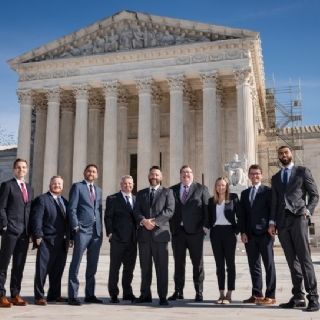
A notable example of impactful pro bono work is partner Tim McHugh’s collaboration with David DePippo from Dominion Energy. They recently received the 2025 Military and Veterans Law Pro Bono Award for securing a landmark U.S. Supreme Court victory in Rudisill v. McDonough. This case restored billions of dollars in educational benefits under the post-9/11 GI bill, positively impacting approximately 1.7 million (and growing) veterans. As a military veteran himself, this work was profoundly meaningful to Tim, and the relationships he built over nearly nine years are invaluable. What began as a first-year pro bono matter became what Tim describes as “one of his greatest career accomplishments.”
A recent collaboration with esteemed alum Cassie Juste, assistant general counsel at Vanguard, exemplifies how strong alumni connections can create powerful opportunities. On July 10, Vanguard and Troutman Pepper Locke teamed up with the Legal Clinic for the Disabled to host an estate planning clinic. After a one-hour training, 18 volunteer lawyers were put into teams and matched with clients to assist with drafting wills, financial powers of attorney, and health care powers of attorney. Two Troutman Pepper Locke notaries volunteered to notarize the documents, so every client left with fully executed advanced planning documents.
Pro bono at Troutman Pepper Locke offers our attorneys the chance to refine their skills, strengthen communities, and make a lasting impact. To learn more about our pro bono practice, click here.
 |
 |
 |
Sara Richman
Beyond our Week of Service, the Pepper Center for Public Service, and pro bono practice, our attorneys and business professionals are deeply committed to various volunteer and charitable endeavors. We are proud of their efforts and grateful for their dedication to service.
Summer Associate Recap
This summer we proudly welcomed 121 talented summer associates from 57 distinguished law schools to join us across 20 of our offices. Many thanks to our recruiting team and attorneys for their time and efforts in delivering hands-on work assignments, networking opportunities, training programs, and meaningful feedback to prepare these students for practicing law.
Troutman Pepper Locke is honored to be part of their career journey and wishes them continued success!
 |
 |
 |
Upcoming Programs and CLE Opportunities
On Demand CLE From Troutman Pepper Locke
Troutman Pepper Locke is pleased to share with our alums an innovative on-demand CLE portal.
You can visit www.troutmancle.com for access to free recorded content and free registration for live webinars presented by Troutman Pepper Locke attorneys.
Simply add programs of interest to your cart and check out as you would an online store. Communications about the program, including PINs for access and CLE certificates, will be sent to the email address you provide during checkout.
Please note that you may need to work with your IT professionals if this site is initially flagged by your cybersecurity software.
Contact our CLE management team with any questions, and we hope you enjoy using this new tool!
Free Fridays: Practicing Law Institute (PLI) CLE Offerings
As part of the firm’s membership, we are happy to offer CLE offerings from PLI to friends of the firm. If you would like to be included in our Free Friday PLI email distribution, please contact Clare Roath.
Be sure to check Troutman Pepper Locke’s insights page for frequent updates on additional offerings, and be sure to share with your fellow alums and friends of the firm!
Alumni on the Move
Click here to see what some of our alums are doing now.
Be sure to share with us any recent moves, new roles, promotions, or accomplishments you or your alumni colleagues have achieved — we’d love to include details in our next newsletter!
Firm News
Troutman Pepper Locke Announces Top National Rankings in Chambers USA 2025 | Troutman Pepper Locke
Troutman Pepper Locke Announces 2025 Legal 500 US Rankings | Troutman Pepper Locke
Troutman Pepper Locke Helps Obtain Release of Pro Bono Client After 27 Years | Troutman Pepper Locke