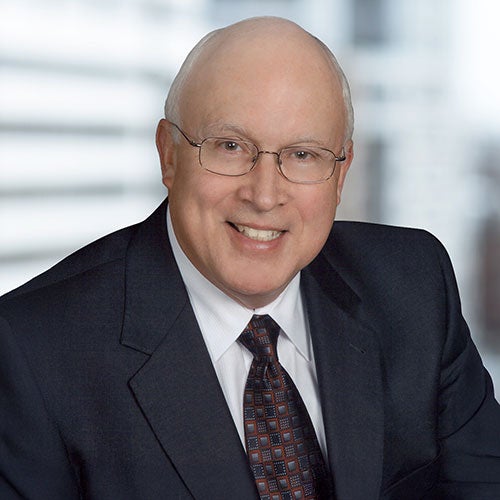
Ray is a senior telecommunications advisor who assists the firm’s attorneys and clients in matters relating to FCC regulation, including license assignments and transfers, equipment authorization, regulatory compliance, and spectrum policy. His career has spanned more than 50 years, including 19 years of experience with the FCC.
Ray’s practice has focused on clients affected by telecommunications regulation, whether or not they are engaged in the commercial provision of telecommunications services. These include clients who use licensed or unlicensed communications facilities such as land mobile dispatch systems, internal point-to-point microwave systems, point-to-multipoint microwave systems, and aviation and maritime communication systems. Such clients include electric utilities and companies that manufacture, import, or market devices containing digital circuitry that are subject to FCC equipment authorization requirements.
In most cases, Ray’s practice has involved assisting clients in obtaining FCC licenses, obtaining rule waivers for unique operations, or obtaining FCC consent for transactions to purchase or sell spectrum or licensed facilities. In some cases, Ray has assisted clients in responding to FCC enforcement actions.
Ray has represented electric utilities in pole attachment negotiations; municipalities in developing cable TV franchising agreements or local ordinances; and public safety entities and other organizations in defending their spectrum allocations.
FCC Experience
Before leaving the FCC in 1988 to enter private law practice, Ray was in training for the Government’s Senior Executive Service. He was chief, Special Services Division, of the Private Radio Bureau (now the Wireless Bureau). Ray was also a trial attorney in the Broadcast Bureau (today, the Media Bureau); head of the Compliance Division of the Private Radio Bureau; and responsible for the regulation of aviation, maritime, and personal radio services. He participated in U.S. delegations to the International Maritime Organization (IMO) and to the Inter-American Telecommunication Commission (CITEL).