


Firm Events
District Court vs. PTAB: Strategic Forum Selection in Life Sciences Patent Disputes
December 10, 2026 | 12:00 PM – 1:00 PM ET

Strategies helps businesses and individuals solve the complexities of dealing with the government at every level. Our team of specialists concentrate exclusively on government affairs, representing clients nationwide who need assistance with public policy, advocacy, and government relations strategies.
This unique program provides innovative and affordable opportunities to startups and early-stage emerging companies with a solid technology or scientific foundation. We help companies that have a quality management team in place and do not have other significant legal representation.
eMerge’s lawyers and technologists work together to deliver strategic end-to-end eDiscovery and data management solutions for litigation, investigations, due diligence, and compliance matters. We help clients discover the information necessary to resolve disputes, respond to investigations, conduct due diligence, and comply with legal requirements.
Author:
EA Weeks, Ph.D.
Contributors:
Amanda Hassan
Heather Morehouse Ettinger, Ph.D.
Judy O’Grady
Mindy Rudolph
III. Scientific and Manufacturing Realities
IV. Regulatory Landscape for CGT Collaborations
V. Intellectual Property Ownership of CGTs
VI. Practical Guidance for Deal Structuring
VII. Conclusion and Forward-Looking Considerations
Cell and gene therapies (CGTs) have moved from scientific concept to commercial reality and are reshaping how life sciences companies structure collaborations, licensing arrangements, and manufacturing relationships. While traditional small molecule and non-CGT biologic products still dominate the market, CGTs, often designed as highly personalized, one-time interventions, raise distinct scientific, regulatory, manufacturing, and intellectual property (IP) issues that do not fit neatly into conventional deal structures.
From a U.S. Food and Drug Administration (FDA) perspective, CGTs are regulated as biologic products1 alongside more familiar non-CGT biologics such as monoclonal antibodies and other protein therapeutics. Within that category, however, CGTs fall into three interrelated types: (1) cell therapies, where the therapeutic is the administration of living cells; (2) gene therapies, which deliver new genetic instructions into a patient’s cells, often via viral vectors; and (3) gene-modified cell therapies, such as CAR-T products, that combine both approaches. These modalities introduce a number of features that materially change deal dynamics:
This paper outlines how these realities translate into transaction terms, with a focus on how familiar deal issues manifest differently in CGT arrangements.
CGTs have fundamentally changed the biopharmaceutical landscape, offering an alternative to traditional small molecule or non-CGT biologic treatment options such as antibody and protein therapeutics. While conventional medications often require regular use over extended periods, CGTs are patient-specific, highly personalized products that can repair, replace, or modify genes or cells to provide long-lasting, potentially curative effects, sometimes in a single treatment.
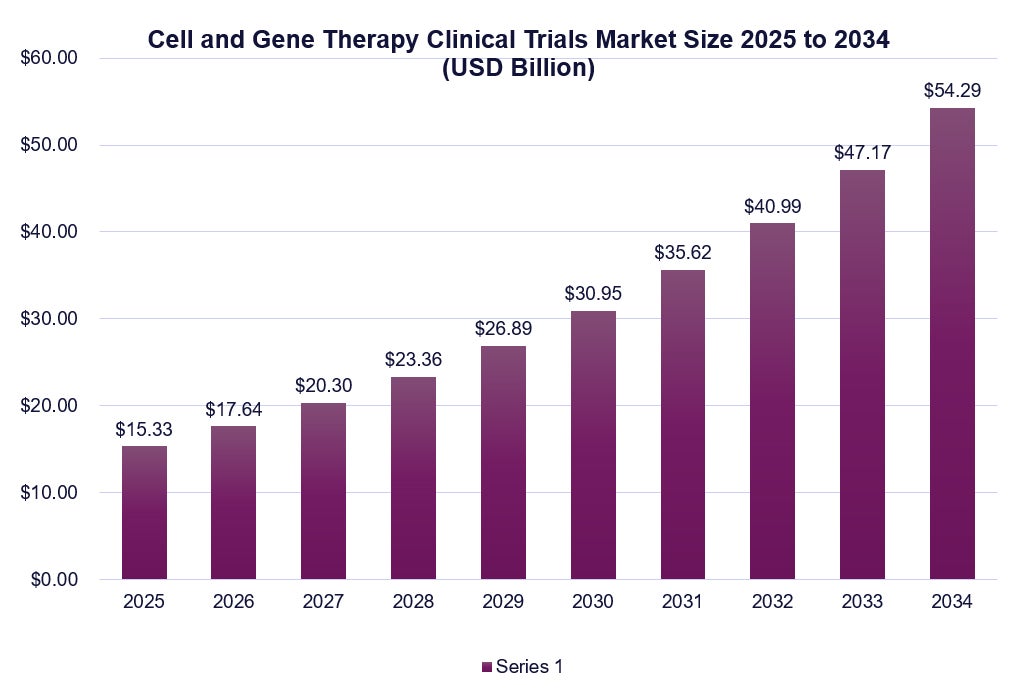
* Pandey, D. (September 18, 2026). Cell and gene therapy clinical trials market companies, size and trends 2026-2035 (Report No. 2881). Precedence Research. https://www.precedenceresearch.com/cell-and-gene-therapy-clinical-trials-market.
As of 2023, there were 26 FDA-approved CGTs, and that number is projected to rise to approximately 64 by 2030.2
Early-stage CGT pipelines typically rely on complex collaborations among emerging biotechnology companies, large pharmaceutical companies, academic institutions, and contract manufacturers. With CGT growth, traditional small molecule licensing and collaboration models are being challenged in two fundamental ways.
First, small molecule products are generally stable and relatively straightforward to manufacture at scale, while CGTs involve more complex manufacturing, scale-up, and logistical considerations. Regulators are responding with more stringent requirements and evolving guidance that can directly affect deal economics.
Second, the personalized nature of CGTs elevates risk, combining uncertain patient outcomes with IP durability challenges. These realities require parties to move beyond traditional deal structures and reexamine how responsibilities, risk, and ownership across multiple platform variables are allocated throughout the CGT lifecycle, from early R&D through commercialization and long-term follow-up.
Many CGTs, especially autologous and gene-modified cell therapies, are personalized, produced in small batches, highly sensitive to process changes, and dependent on a limited number of specialized CDMOs and material suppliers. Even where products are not patient-specific, capacity is frequently modality driven and tied to specialized platforms, equipment, and sites. Allogeneic therapies and some in vivo gene therapies are more scalable, but still face challenges around vector production, batch success rates, release testing, and site readiness.
“Capacity” means different things across CGT modalities. For in vivo therapies, capacity is often a function of vector production and procedure throughput at treatment centers. For autologous programs, capacity is better measured in patient “slots” or runs, with each slot representing a discrete manufacturing event tied to an individual patient. For allogeneic therapies, capacity may more closely resemble traditional volume-based models but remains sensitive to upstream cell line performance and complex process parameters.
These constraints make clear allocation of manufacturing rights, responsibilities, and control essential. Detailed milestones linked to CMC events (process validation, scale-up, and site qualification) are common from the inception of the manufacturing relationship. Partners must also decide what activities to outsource and what to retain in-house, embedding those strategic choices into the licensing and supply framework rather than treating them as purely operational matters. Key considerations include which aspects of manufacturing (e.g., vector production, cell processing, fill-finish) will be outsourced or retained; whether key CDMOs and service providers are subject to exclusivity or other restrictions; and how logistics for patient treatment deployment, including treatment center certification, chain of identity and chain of custody procedures, and site onboarding, will be managed.
Without clear contractual guardrails around capacity and performance, including precise definitions of “capacity,” service levels, remedies for shortfalls, and step-in or tech transfer rights, there is elevated risk of batch failures, supply interruptions, and regulatory setbacks that can undermine even a well-structured licensing relationship.
Collaboration arrangements must implement robust supply and quality frameworks to ensure patient safety and avoid manufacturing disruptions that could derail development timelines or commercial supply.
Manufacturing platforms often have limited capacity shared across multiple programs and sponsors. CGT production processes are highly sensitive to even small deviations, which can materially affect safety, efficacy, and product comparability. The personalized nature of autologous CGTs further magnifies the importance of chain of identity and chain of custody: while a quality issue in a traditional small molecule production line might be isolated at the batch level, a quality error in an autologous therapy could have significant adverse consequences for individual patients.
These realities require detailed allocation of responsibilities across the production line, including cell or tissue collection, transport, processing, testing, release, distribution, and administration, alongside comprehensive quality agreements addressing deviation management, change control, regulatory inspections, and audit rights. Liability allocations must be carefully calibrated, including indemnities, insurance requirements, and liability caps with appropriate carve-outs for quality or safety failures, regulatory violations, or willful misconduct.
When combined with constrained capacity and complex logistics, these quality considerations make it critical that contracts integrate quality and safety management directly into core business terms, rather than relegating them to technical appendices.
Several pathways can potentially accelerate CGT development, but they also compress decision-making and shift risk in ways that must be reflected in deal structures.
Regenerative Medicine Advanced Therapy (RMAT) designation is available for CGTs that address serious or life-threatening conditions, providing opportunities for earlier and more intensive FDA engagement. It can enable priority review or more flexible development programs, often pushing sponsors to generate meaningful clinical data earlier and align with FDA on CMC and long-term safety expectations sooner.
Orphan drug designation offers economic incentives for therapies targeting rare diseases, including seven years of market exclusivity, tax credits for qualified clinical testing, and waived FDA user fees. RMAT and orphan designations are frequently combined and can serve as important triggers in deal economics.
Accelerated approval allows earlier approval based on intermediate or surrogate endpoints reasonably likely to predict clinical benefit, subject to mandatory post-marketing trials and long-term follow-up. FDA has become increasingly cautious in granting and maintaining accelerated approvals, particularly where confirmatory programs lag or fail to confirm benefit.
These mechanisms carry several transactional implications. Milestone structures should be tied to regulatory designations, key data readouts, and the type and timing of approval, accelerated versus traditional, in addition to traditional phase-based milestones. Contracts should specify who leads regulatory strategy and interactions, which pathways will be pursued in which jurisdictions, and how costs and responsibilities are shared. Agreements must address what happens if a designation or accelerated approval is denied, delayed, or withdrawn, including the impact on economics, diligence obligations, and termination or step-down rights.
From an IP perspective, compressed timelines also affect patent strategy. If sponsors expect accelerated approval or early designations, core patent families may need to be prosecuted more aggressively, often with prioritized examination, to ensure patent coverage aligns with anticipated approval timing and preserves meaningful effective exclusivity.
CGTs frequently rely on small clinical data sets, intermediate endpoints, and evolving real-world evidence to support both initial approval and post-approval label expansions. Long-term follow-up requirements, patient registries, and risk evaluation and mitigation strategies (REMS) can extend for 10 to 15 years or more. As a result, collaborations increasingly focus on which party owns various categories of data (clinical trial data, long-term follow-up, registries, real-world data, and manufacturing and quality data); which party must have access to those data, and on what terms, for regulatory submissions, safety monitoring, internal R&D, and IP generation; and how long data sharing and access rights must last, including through changes in partners or product ownership.
Data use is also subject to legal and regulatory constraints, including cross-border data transfer rules and data protection regimes such as HIPAA and GDPR. Data governance provisions must address compliance with applicable privacy and security laws, mechanisms for de-identification or pseudonymization where appropriate, and governance for publication and external disclosure, including joint review and timing controls where publications may have regulatory or IP consequences.
Long-term safety databases and real-world evidence can also support new IP, including method-of-treatment, patient selection, and dosing claims, administration regimens, and platform-wide refinements. Collaboration agreements should anticipate these downstream innovations and clearly allocate ownership, licensing, and enforcement rights.
CGTs generally rely on a mixture of vectors and gene editing tools, product-specific patents, manufacturing know-how, and trade secrets. This layered “IP stack” can create conflicts over subsequent inventions and improvements if not carefully structured, particularly where alignment is needed across CDMOs, technology providers, and academic licensors.
Key components include:
Parties must consider how improvements to background IP and jointly or separately arising IP are handled, including whether joint ownership is used, and if so, the rights and obligations of each party with respect to use, enforcement, licensing, and prosecution. Arrangements must also address the consequences of a party’s exit or a license termination, including ownership and licensing of resulting IP, buy-out or assignment options, and survival of rights necessary to meet long-term regulatory obligations.
Manufacturing for CGTs is often as much about know-how and process as it is about patents, increasing the risk that a party will be contractually dependent on a process, site, or supplier it cannot control, reproduce, or relocate.
To mitigate this risk, agreements should define a concrete “CMC package” or “tech transfer package” that includes critical materials, process descriptions, batch records, analytical methods, and quality standards necessary to reproduce, qualify, and scale the manufacturing process.
Contracts can also differentiate between information provided at signing, at specified development or regulatory milestones, and highly sensitive platform know-how disclosed only upon defined triggers such as failure to meet capacity metrics, partner insolvency, or exercise of step-in rights. Licensed know-how and process IP should be restricted to what is necessary or reasonably useful to develop, manufacture, and commercialize the licensed product in the agreed field and territory, with robust confidentiality and access control obligations.
In some cases, parties implement escrow or contingency arrangements for key know-how and materials to mitigate risk in the event of licensor or CDMO insolvency, change of control, or strategic withdrawal from the CGT space, providing a path to continued supply and regulatory compliance if a critical upstream relationship fails.
Given the number of technologies that make up a CGT platform, freedom to operate (FTO) is a substantial hurdle at the inception of any CGT arrangement. FTO diligence must cover each layer of the IP stack: platform FTO (assessment of potentially blocking vector, cell platform, and gene editing tool patents, and sufficiency of existing licenses for intended indications and territories); product FTO (evaluation of construct-specific and indication-specific patent claims, including potential blocking method-of-treatment patents); and process and manufacturing FTO (identification of third-party patents on critical process steps, analytical methods, or equipment configurations, as well as dependence on non-public CMC know-how held by partners or suppliers).
Background IP must be carefully and narrowly licensed to comply with all upstream restrictions, which often involve multiple parties and may include field-of-use and territory limitations, restrictions on subcontracting or sublicensing, audit rights, reporting obligations, and manufacturing location requirements such as those imposed by Bayh-Dole.
From a contractual perspective, FTO risk can also be addressed through robust representations and warranties regarding freedom to operate and ownership, enforceability, and sublicensability of the IP stack and key upstream licenses; covenants to maintain upstream licenses in force and to notify partners of adverse events such as third-party claims or license challenges; and detailed tech transfer, access, and step-in rights that provide a practical path to alternative manufacturing arrangements if an upstream license fails or a third-party claim threatens a critical process. Together, these tools help ensure that an FTO or manufacturing IP issue does not prevent development or commercialization after substantial investment.
Because CGT platforms involve a complex bundle of IP, deals are rarely simple single-asset arrangements. Often, the entirety of a platform, or a defined subset of it, is licensed to a partner, leaving the door open for multiple assets and indications over time. This approach leverages the cost and effort required to transfer and operationalize a complex platform across more than one program, provides a baseline contractual framework under which new products or indications can be added as options or additional programs, and encourages alignment of CMC, regulatory, and IP strategies across a family of related products. License grants and restrictions should be tailored to reflect this structure, including careful field and indication definitions, option mechanics, and governance for selecting and prioritizing new programs.
Where both parties are contributing significant IP, know-how, or capacity, joint development and co-commercialization structures may be more appropriate. Under these arrangements, parties share risk and decision-making through a defined governance framework and typically share in profits or economics in specified territories or indications. Co-development structures can better align incentives, facilitate coordinated regulatory and CMC strategies, and provide flexibility to adapt to evolving regulatory guidance over the long CGT product lifecycle. They require careful attention to governance committees, decision rights (including tiebreakers and escalation mechanisms), budget approvals, and dispute resolution mechanisms tailored to technical and regulatory disagreements.
Parties are also increasingly dividing rights by geography or therapeutic field, aligning the deal’s footprint with each party’s strengths. Such arrangements can improve execution and local market access, allow partners to pursue different commercialization strategies while maintaining a consistent global safety and regulatory profile, and spread risk and investment across a broader portfolio of indications. These structures should address cross-territorial data sharing, harmonization of safety and REMS obligations, and coordination on global lifecycle management.
CGT economics differ from traditional models in several important ways. Many CGTs are designed as one-time, high-value interventions, with significant value inflection points tied to regulatory designations, early-phase efficacy signals, and CMC readiness, driving larger up-front payments and earlier milestones. Durability of effect, late-emerging safety issues, and uncertain real-world uptake complicate traditional volume-based milestone and royalty structures, and parties may need to consider outcomes-based components or flexible pricing models. REMS, 10-to-15-year follow-up, registries, and confirmatory trials can also materially affect long-term costs and margins.
In practice, economic frameworks for CGTs should tie milestones not only to clinical phases and sales thresholds, but also to regulatory designations, accelerated approvals, and key CMC milestones. Agreements should incorporate contingency economics that adjust certain payments or royalties if key regulatory pathways are unavailable, if designations are denied or withdrawn, or if manufacturing modality or site changes materially alter cost and risk. Economics should also be aligned with the party that bears long-term regulatory and safety obligations, recognizing that those obligations may extend beyond patent or exclusivity terms.
Autologous and allogeneic therapies have materially different deal structure implications.
For autologous products, capacity should be characterized by patient slots or runs rather than bulk volume. Contracts should detail processes for booking and adjusting capacity, including advance notice requirements, cancellation and rescheduling rules, and fees or penalties for missed or late slots, along with clear procedures and reporting mechanisms for manufacturing timing and service failures, and step-in rights or other mechanisms to enable transfer to an alternative manufacturer if persistent capacity shortfalls occur.
For allogeneic products, volume-based commitments, including reserved capacity or minimum purchase obligations, are often appropriate. Contracts should address procedures for managing capacity constraints, including prioritization among programs or indications, and include ramp-up targets, timelines, and investment responsibilities for scaling manufacturing capacity.
In both cases, contracts should define what constitutes a capacity failure, specify remedies, and align manufacturing expectations with realistic regulatory and commercial timelines.
CMC development should be directly tied to contractual benchmarks and performance. Typical provisions include:
Because FDA views manufacturing changes for CGTs, including movement to new sites or CDMOs, as high-impact events, agreements should expressly address the regulatory implications of tech transfer, including comparability packages, potential clinical bridging, and responsibility for delays or additional studies.
The personalized nature and direct patient deployment of many CGTs demand strong contractual guidelines around quality and chain of custody. Key considerations include:
These measures should be integrated with the governance and data sharing framework to support rapid detection and remediation of quality issues and to meet regulatory expectations for ongoing safety and effectiveness monitoring.
Given the number of regulatory pathways and designations available to CGTs and their associated risk profiles, the parties must agree on regulatory strategy, decision-makers, and financial responsibility for regulatory processes. Contracts should identify the party that will act as the regulatory lead in each jurisdiction, including responsibility for holding INDs and BLAs, preparing and submitting regulatory filings, and serving as the primary point of contact with authorities, and allocate financial responsibility for regulatory-related costs including designations, approvals, post-marketing commitments, REMS, and long-term follow-up. Agreements should also specify which regulatory decisions require mutual consent (e.g., label changes, addition or removal of indications, major CMC changes, REMS redesign) and include dispute resolution procedures for disagreements. These governance provisions should be designed with the long-term regulatory “tail” in mind, recognizing that obligations may span decades and multiple commercial partners.
CGTs inevitably generate large and diverse data sets, from clinical and safety data to manufacturing and quality data and long-term registry data. Contracts should outline ownership of key data sets, grant limited but sufficient access rights to enable each party to meet regulatory obligations and internal business needs, define permitted uses and disclosures subject to confidentiality and joint review, and anticipate and limit use of shared data for competitive purposes. Long-term cooperation and data sharing obligations should survive termination or assignment, ensuring that the last holder of the product has access to sufficient data to maintain regulatory compliance and safety monitoring.
Agreements should draw clear lines between background assets, program-specific IP, and improvements, and tailor license grants and platform protections accordingly. Key elements include precise definitions of background IP, foreground IP, and improvements; license grants with appropriate field-of-use, territory, and product-specific limitations balanced against the need to accommodate label expansions or new indications; license-back provisions where appropriate; and adequate use rights for both parties to conduct development, regulatory activities, CMC work, and commercialization.
Ownership and control of prosecution, maintenance, enforcement, and patent term extension decisions should be aligned with the party most invested in each layer of the IP stack, while maintaining sufficient cooperation obligations to avoid stranded IP or misaligned lifecycle strategies.
Due to the number of components required to develop and commercialize a CGT platform, FTO analyses are essential during diligence. Contracts should:
These measures, combined with robust tech transfer and step-in rights, help mitigate the heightened FTO and operational risks inherent in CGT platforms.
CGT collaborations require a distinct and nuanced approach. Scientific and regulatory innovation has outpaced traditional deal templates, and parties can no longer assume that models designed for small molecule or non-CGT biologic products will adequately address the risks and opportunities of CGTs.
Successful CGT collaborations:
As FDA and other regulators continue to refine CGT-specific guidance, and as more products reach the market, transactional practice will need to remain flexible. Parties that integrate scientific, regulatory, and IP considerations into their deal architecture, and that plan for the full lifecycle of CGT products, including long-term safety and data obligations, will be best positioned to deliver these transformative therapies to patients in a sustainable and durable way.
1 From a regulatory perspective, FDA generally categorizes these products into two broad groups. The first is biologic products, which include cell and gene therapy products as well as more traditional non-CGT biologics such as monoclonal antibodies and other protein therapeutics. The second is human cell and tissue products (HCT/Ps), which are subject to a distinct regulatory framework. This white paper focuses on biologic products and, in particular, CGTs; it does not address the standalone HCT/P regulatory framework. ↩
2 Elsallab, M., Ouvina, M., Arfe, A., & Bourgeois, F. T. (2024). Mapping the clinical development trajectory of cell and gene therapy products. Clinical Pharmacology & Therapeutics. https://pmc.ncbi.nlm.nih.gov/articles/PMC12447590/. ↩
Resources
This just in
Firm Events
District Court vs. PTAB: Strategic Forum Selection in Life Sciences Patent Disputes
December 10, 2026 | 12:00 PM – 1:00 PM ET
Speaking Engagements
Performance on Trial: The Construction Manager’s Standard of Care Examined from All Angles
December 2, 2026 | 4:15 PM – 5:30 PM ET
The Hyatt Regency Huntington Beach
Huntington Beach, CA
Speaking Engagements
ACI’s 31st Annual Conference on Drug & Medical Device Litigation – 2026
December 2 – 3, 2026
New York Marriott Marquis
1535 Broadway, New York, NY 10036
Speaking Engagements
Entering the Defense Market: USA, Canada, Ukraine, UK, Germany, Poland
November 19, 2026 | 3:00 PM – 5:00 PM CT
Virtual